
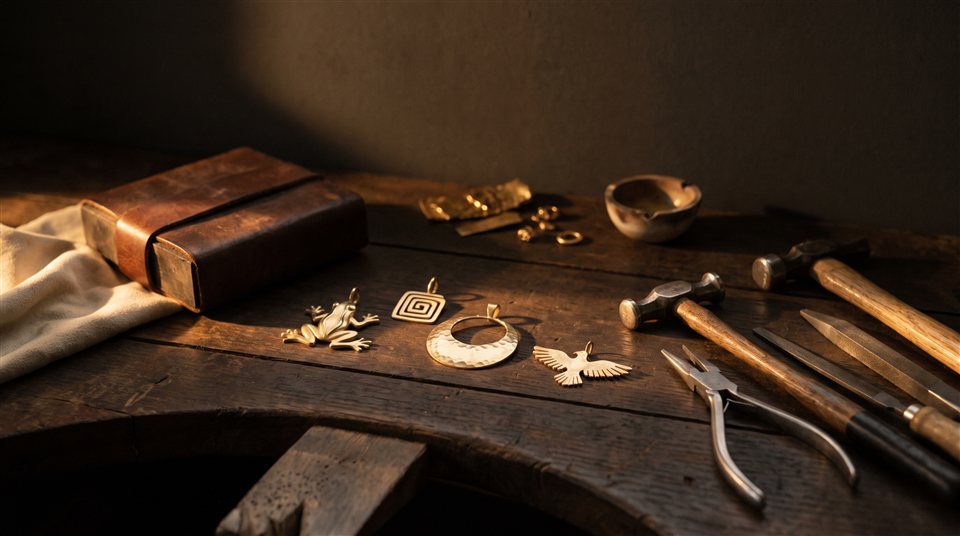
Nobody here wrote anything down. No books, no alphabet, no scribe keeping records for archaeologists to argue about later. What survived instead is stranger and, honestly, more useful: the metal itself, and the exact shapes people chose to pour it into.
Those shapes were not chosen because they looked nice on a chain. Someone across the plaza could read them at a glance. They said who you were, what you were asking for, and what you believed was looking after you.
The frog: rain, and the luck that came with it
The whole harvest depended on the rain arriving more or less on time, and the frog always got there first. It appears before the water does. The goldsmiths of Gran Coclé, in what is now central Panamá, cast it into small charms called huacas.
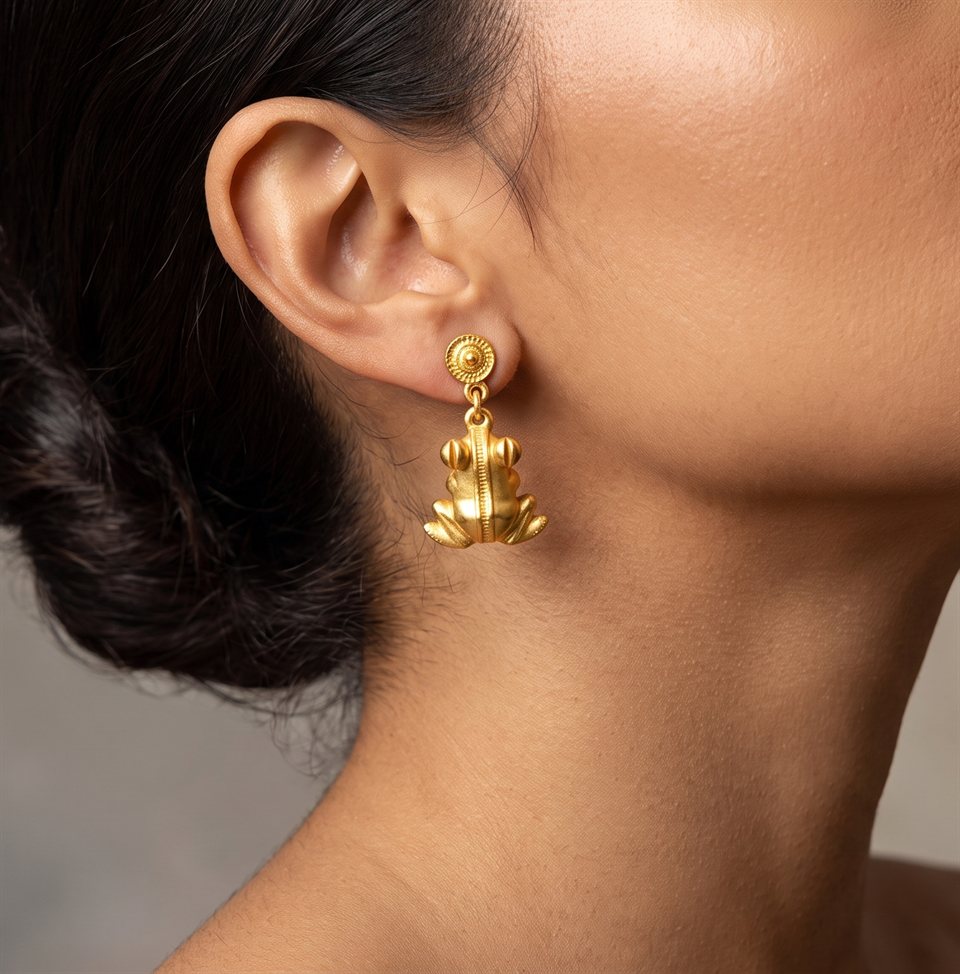
The connection never really went away. The golden frog is still the country's favourite luck symbol, popular enough to have its own national day. If you had to bet on the most recognisable pre-Columbian shape on the isthmus, this is the safe bet.
The greca: a path with no visible end
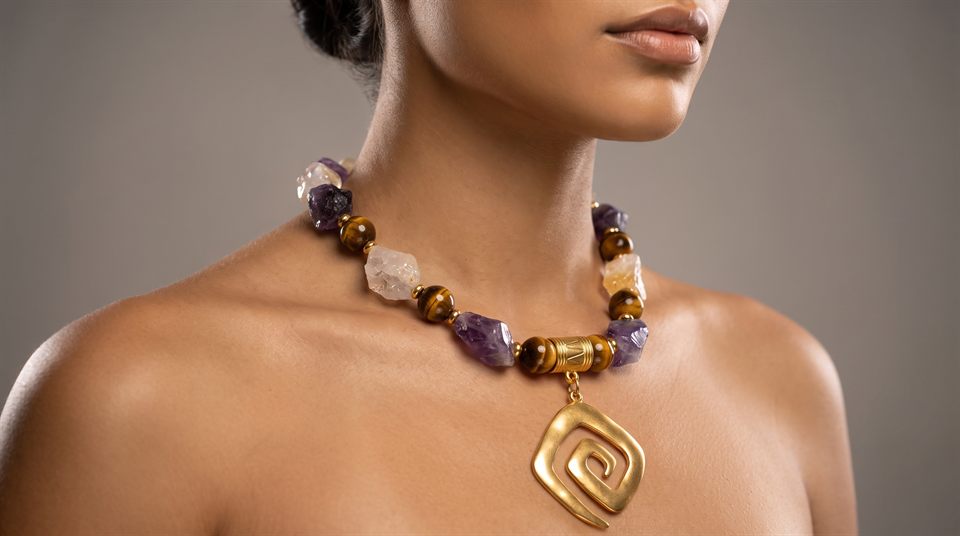
The square spiral, called la greca, is one of the oldest marks in the Americas, and it does not behave the way a spiral should. It turns inward, tightens and never quite closes. People read it as the road of a life, or as the daily route of the sun, depending on who you ask.
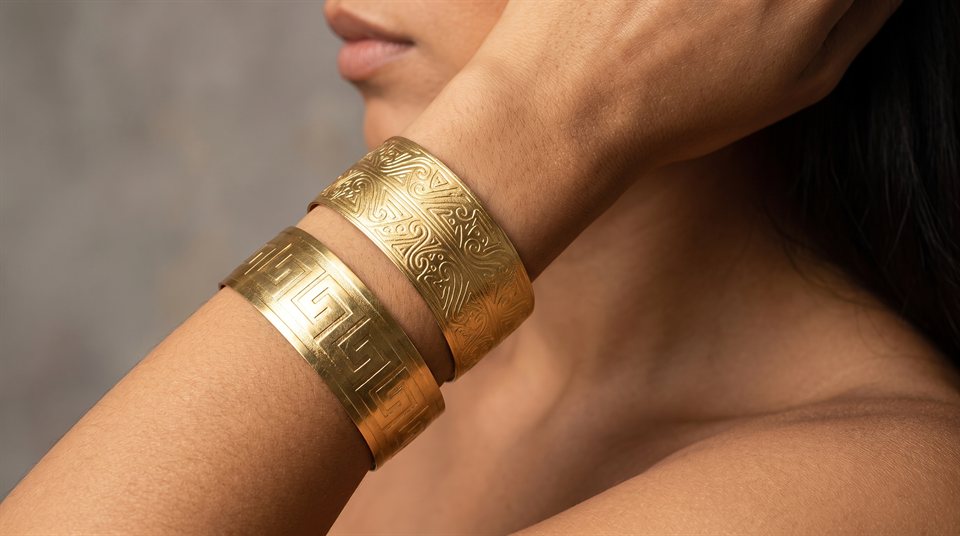
They clearly could not leave it alone. It turns up on cuffs, on beads and on pendant after pendant. Wearing it meant wishing a safe journey on whoever carried it, which is probably why it still feels right on something you bring home from a trip.
A frog asked for rain. An eagle told you who was in charge. A spiral wished you a safe road home.
The nariguera: rank you could spot from across the room
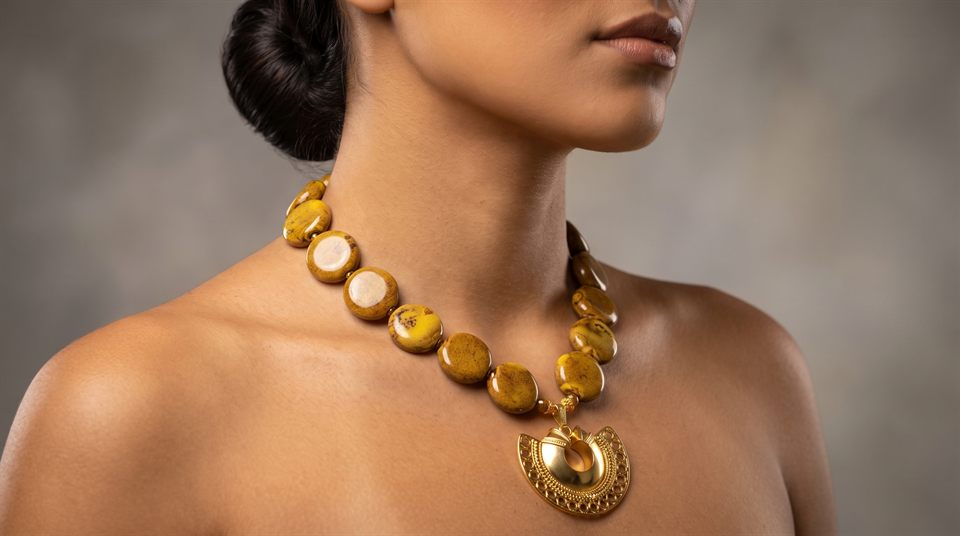
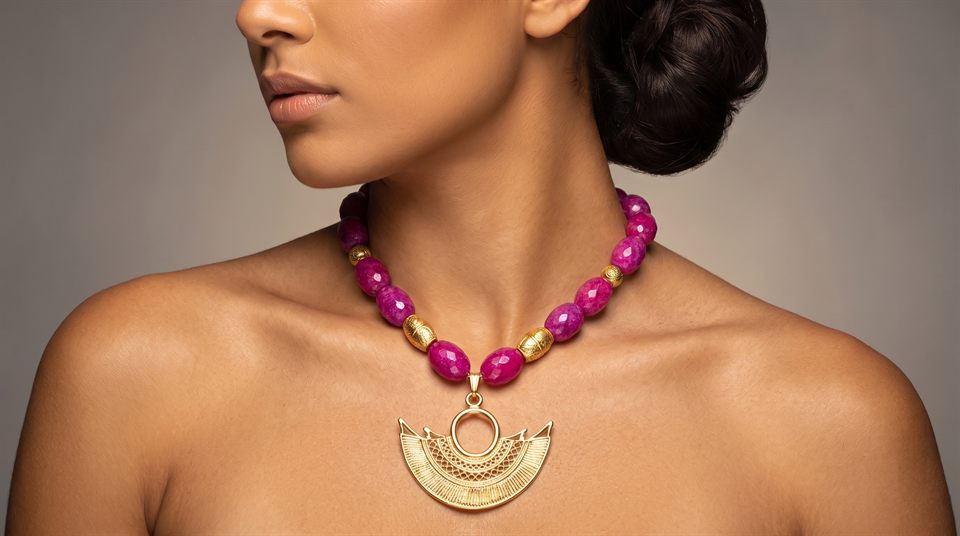
A crescent of gold, worn over the face or the chest. It did real work. Catching the sunlight, it announced who was in charge before that person said a word. Chiefs wore it to feasts, to ceremonies and anywhere they needed to be noticed first.
Not every group made it the same way. The Tairona, up in the Sierra Nevada of Colombia, cast heavy solid crescents for the face, and there was no mistaking those for anything but serious metal. The Sinú went the other way and did something genuinely odd. They cast the gold in a single piece, then worked it until it looked woven, a technique now called false filigree. Their crescents are pierced all over and weigh almost nothing. Held up to the light, they look like lace, which is a strange thing to say about metal.
The harpy eagle: a flight between worlds
The national bird of Panamá also happens to be the most powerful raptor in the Americas, which is a fitting pair. Goldsmiths cast birds like this one to stand for a shaman's flight, the trip between the world people live in and whatever lies on the other side. Chiefs wore them on the chest to show rank.
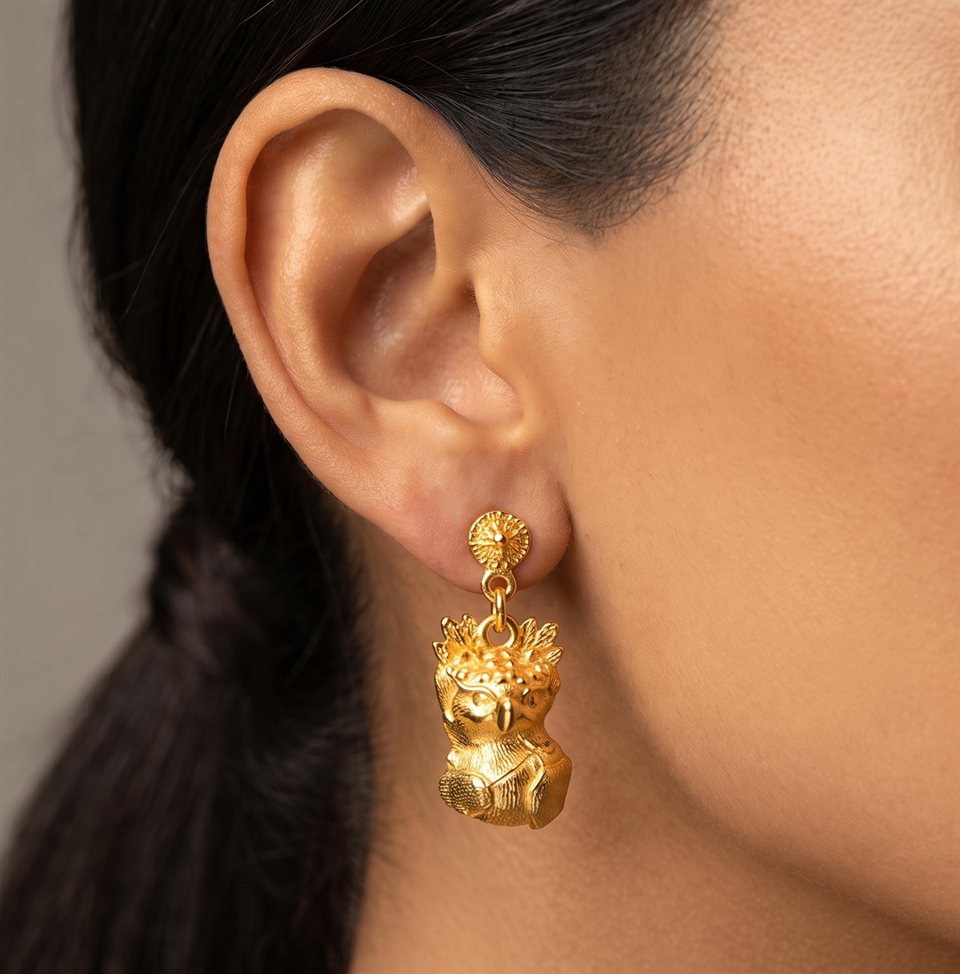
People mistake them for owls all the time, and it is an easy mistake to make. The clue is the crest. It was worked feather by feather, and it is clearly where the goldsmith spent the most patience.
Why this should matter to a piece of jewelry
Gold here was never money. It was closer to a sentence you could wear.
That is the whole difference between a souvenir you forget in a drawer and a piece that actually says something. It is also why we leave the symbols alone instead of smoothing them into a generic tribal shape that could mean anything, which is another way of saying nothing.